Founder
Josh Boehm reads organizations and places through the structure and the incentives that produce the outcome, rather than through the account people give of it.
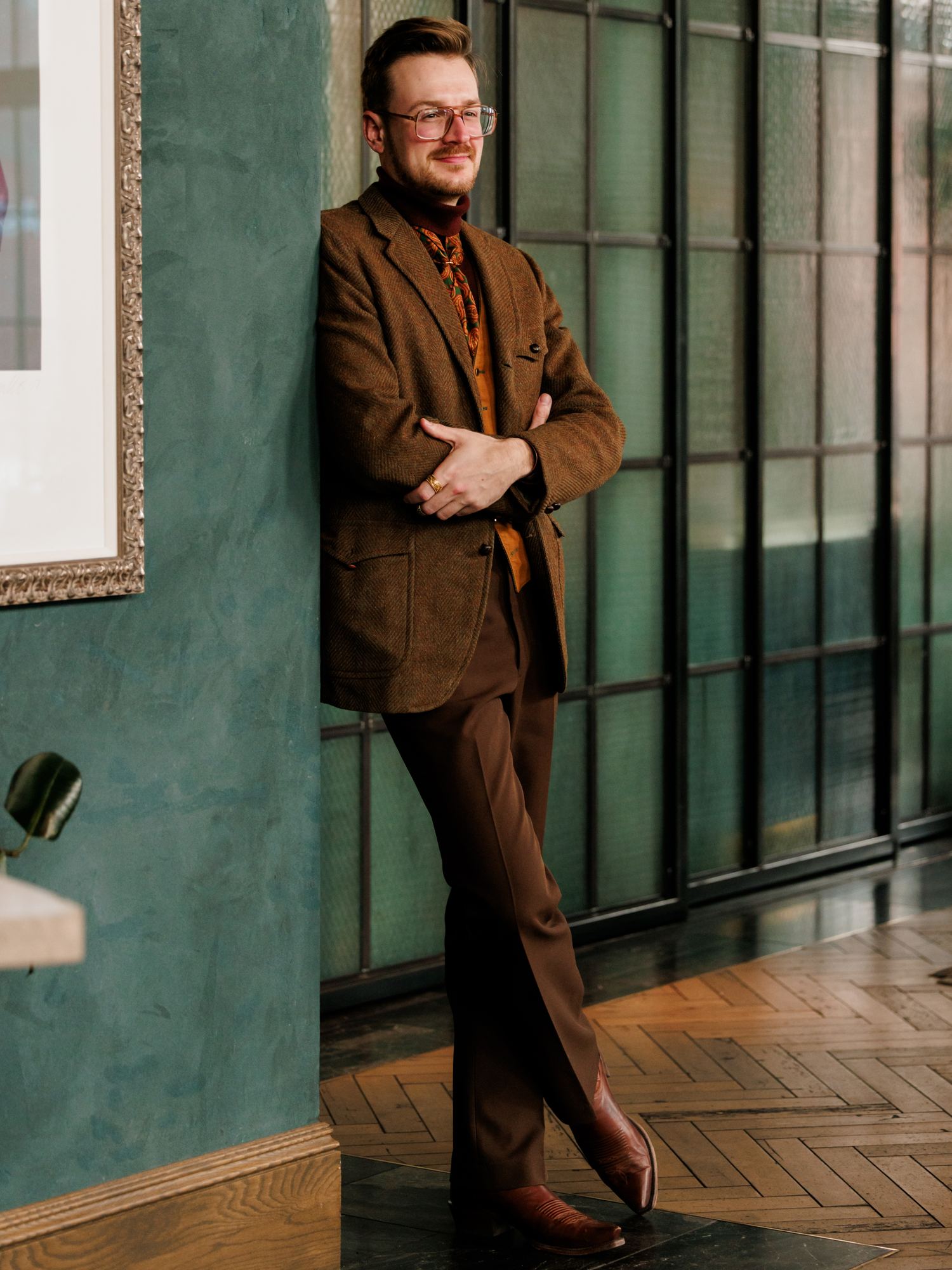
He was homeschooled on a farm in rural Minnesota and, as a teenager, converted the family farm machinery shop to automotive, which is where the habit of learning a trade from the thing itself started. He went to Minneapolis for degrees in architectural drafting and construction management from Dunwoody College of Technology. He spent a summer interning on forensics, investigating fire and storm claims and visiting job sites to watch air, vapor, and water barriers go on, then testing commercial and residential windows for water penetration and air leakage. One of those sites was a forty-two story tower going up in Minneapolis, with Art Deco profiles cast into its precast panels.
Nearly five years of federal work followed, much of it arriving on short notice. A Friday call put him in Cheyenne that Monday, on a ground-up police station for the Air National Guard that had gone sideways and was missing half its site team. Fabric headliners underground at Minuteman III silos, grind and paint striping on an active runway in Arizona, an F-16 hangar whose only drawings were from 1955, and the 1912 Gull Lake Reservoir Dam Tender’s House in Minnesota, determined eligible for the National Register of Historic Places, where the correct ridge cap did not exist domestically.
On nearly nineteen acres at the Fargo metro fringe he took one piece of ground through every discipline that governs it: the subdivision, the private governance that will decide what gets built there, the municipal process, and the capital. A decision in any one of them shows up in the other three.
He has supplied Canadian fiberglass windows, following them from the currency, the customs paperwork, and the landed cost through to the glazing package, the sightlines, the swing direction, and how the window performs once it is in the wall.
The first house he designed he kept as complicated as possible. A 1990s ranch was moved forty miles onto a new basement and is being rebuilt as a vernacular Victorian, intended to carry a full Doric order in commodity siding, down to a stock K gutter standing in for the cymatium.
Most recently, a Taco Bell in Rochester, Minnesota, taken over the morning the slab poured, behind schedule, the superintendent gone. He had never been to the city or built the typology. Occupancy came hours before the city closed for the week, and the opening would have slipped without it.
Networks
He is a founding member of the Minnesota Subcommittee of the Institute of Classical Architecture and Art’s Chicago-Midwest chapter, and co-runs the Twin Cities Emerging New Urbanists, the young professionals arm of the Congress for the New Urbanism. He has assisted Strong Towns Fargo, is a member of the Incremental Development Alliance and the Victorian Society, and takes part in Neighborhood Evolution. He attends building science symposiums, meetups, and lectures across the United States and Canada, and walks historic neighborhoods and houses across the country.